
AI for Healthcare Front Desk: Automate Calls, Scheduling & Patient Follow-Ups



The Hidden Chaos Behind Healthcare Front Desks
Walk into any busy clinic, and the front desk tells the real story. Phones are ringing non-stop. Patients are waiting for confirmation. Staff juggling calls, schedules, and paperwork all at once. In many cases, important calls go unanswered, appointments are missed, and follow-ups slip through the cracks.
This isn’t just an operational issue; it directly impacts patient experience and clinic revenue. Today, patients expect quick responses, seamless booking, and timely communication. But traditional front desk systems weren’t built for this level of demand.
That’s where AI is stepping in, not as a futuristic concept, but as a practical solution already transforming healthcare operations.
Why Traditional Front Desk Operations Are Failing
Most clinics still rely on manual processes at the front desk. While this worked in the past, it’s becoming increasingly unsustainable. Here’s why:
High call volumes: Staff can only handle one call at a time, leading to long wait times and missed opportunities
Manual scheduling errors: Double bookings, incorrect entries, and delays are common
Missed follow-ups: Patients often don’t receive reminders or post-visit communication
Staff burnout: Repetitive tasks and constant interruptions reduce efficiency and morale
Over time, these issues compound into lost revenue, poor patient satisfaction, and operational inefficiencies.
What is AI for Healthcare Front Desk?
AI for healthcare front desk refers to using intelligent systems to handle routine administrative tasks such as calls, appointment scheduling, and patient follow-ups. Think of it as a digital front desk assistant that works 24/7. It can:
Answer patient calls instantly
Schedule and manage appointments
Send reminders and follow-ups
Handle repetitive queries without human intervention
Instead of replacing staff, AI supports them by allowing your team to focus on higher-value tasks like patient care.
How AI Automates Front Desk Operations
AI-Powered Call Handling (24/7 Availability)
AI voice systems can answer incoming calls instantly, even outside working hours. They can:
Book appointments directly during the call
Answer common patient questions
Route complex queries to the right staff
This means no missed calls and no missed opportunities.
Smart Appointment Scheduling & Rescheduling
Appointment Scheduling becomes seamless with AI.
Real-time calendar integration prevents double bookings
Patients can reschedule without calling the clinic
Automated confirmations reduce confusion
Most importantly, it ensures that your schedule stays optimized.
Automated Patient Follow-Ups
Follow-ups are critical but often overlooked. AI automates this by:
Sending appointment reminders via SMS, email, or calls
Sharing post-visit instructions
Collecting feedback or documents
This improves both patient engagement and treatment outcomes.
Key Benefits of AI for Healthcare Front Desk
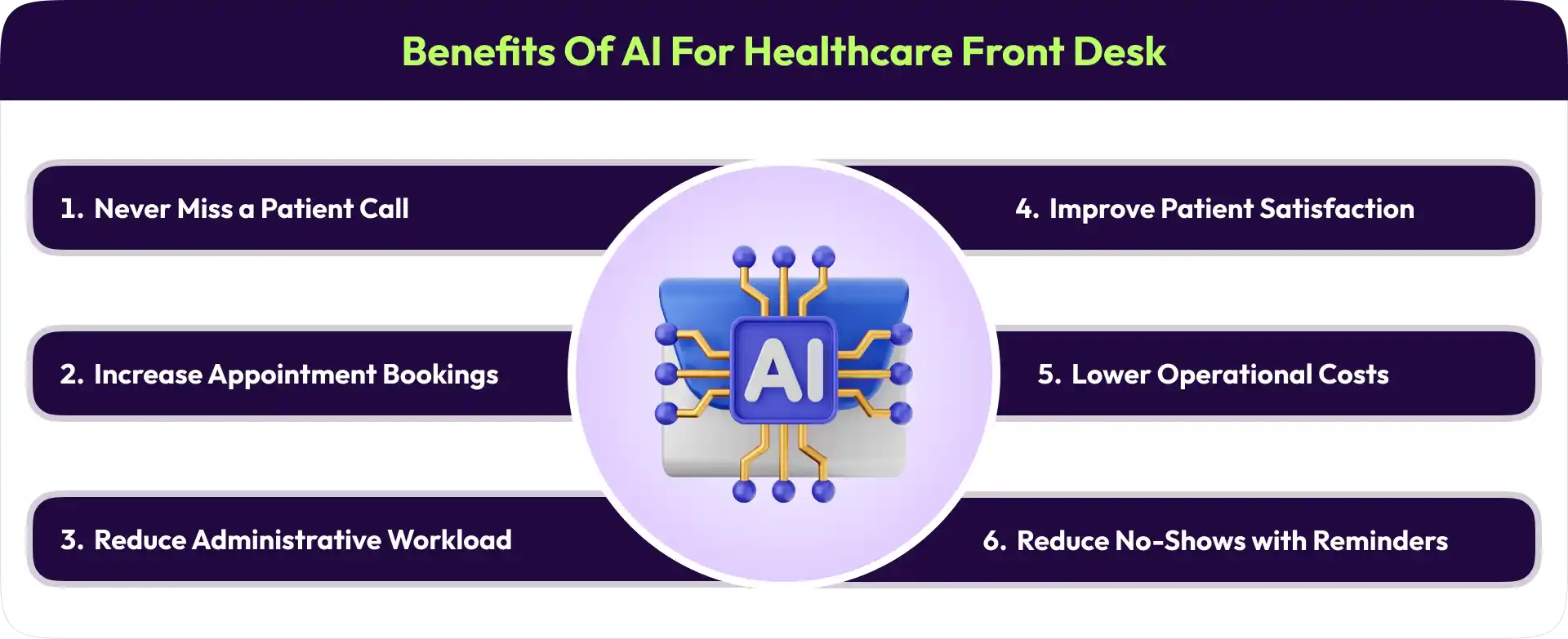
Adopting AI at the front desk isn’t just about automation, it’s more about improving how your clinic operates and how patients experience your services. Here’s what clinics typically gain:
1. Never Miss a Patient Call
Every missed call is a potential lost appointment. AI ensures all incoming calls are answered instantly, whether during peak hours, after hours, or weekends, so you never lose a patient due to unavailability.
2. Increase Appointment Bookings
With instant responses and real-time scheduling, patients can book appointments without waiting. This convenience directly leads to higher conversion rates and better utilization of your schedule.
3. Reduce Administrative Workload
Front desk staff spend a significant amount of time on repetitive tasks like answering calls, confirming appointments, and sending reminders. AI handles these tasks automatically, freeing up staff to focus on patient care and in-clinic interactions.
4. Improve Patient Satisfaction
Patients expect quick, smooth, and reliable communication. AI delivers consistent responses, faster booking, and timely follow-ups by creating a more professional and patient-friendly experience.
5. Lower Operational Costs
Hiring and training additional front desk staff can be expensive. AI helps reduce the need for extra resources while maintaining high efficiency, making it a cost-effective solution for growing clinics.
6. Reduce No-Shows with Smart Reminders
Missed appointments are a major revenue drain. AI sends automated reminders via calls, SMS, or email, and can even follow up multiple times to ensure patients show up as scheduled.
7. Faster Response Time Across All Channels
Whether it’s a phone call, message, or email, AI responds instantly. This speed improves patient trust and reduces frustration caused by delays or unanswered queries.
Clinics that adopt AI often see immediate improvements not just in efficiency, but in patient retention, staff satisfaction, and overall operational control.
Real-World Use Cases of AI in Healthcare Front Desk
AI isn’t limited to large hospitals, it’s being used across different types of healthcare providers.
1. Small Clinics Handling High Call Volumes
A small clinic with limited staff often struggles during peak hours. AI ensures every call is answered, even when staff are busy with in-person patients.
2. Multi-Location Healthcare Providers
Managing appointments across multiple branches can get complicated. AI centralizes scheduling and ensures consistency across locations.
3. Specialty Clinics (Dental, Dermatology, etc.)
These clinics rely heavily on repeat visits and follow-ups. AI ensures patients receive reminders and stay engaged throughout their treatment journey.
4. After-Hours Patient Engagement
Patients often call outside working hours. AI handles these interactions, books appointments, and captures leads even when your clinic is closed.
5. Reducing No-Shows with Intelligent Reminders
AI doesn’t just send reminders, it can follow up multiple times through different channels, significantly reducing missed appointments.
6. Handling Seasonal or Peak Demand
During flu season or health campaigns, call volumes spike. AI scales instantly without needing additional staff.
Before vs After AI Implementation
This is where the impact becomes clear.
Without AI:
Calls go unanswered during busy hours
Staff manually manage every booking
High no-show rates due to missed reminders
Overworked front desk teams
Limited visibility into patient communication
With AI:
24/7 call handling with zero missed opportunities
Automated scheduling and rescheduling
Smart reminders reduce no-shows significantly
Staff workload decreases, productivity improves
Centralized system for all patient interactions
Measurable Improvements Clinics See:
Increase in appointment bookings
Reduction in call handling time
Lower patient wait times
Improved patient retention
Better staff efficiency
Key Features to Look for in an AI Front Desk System
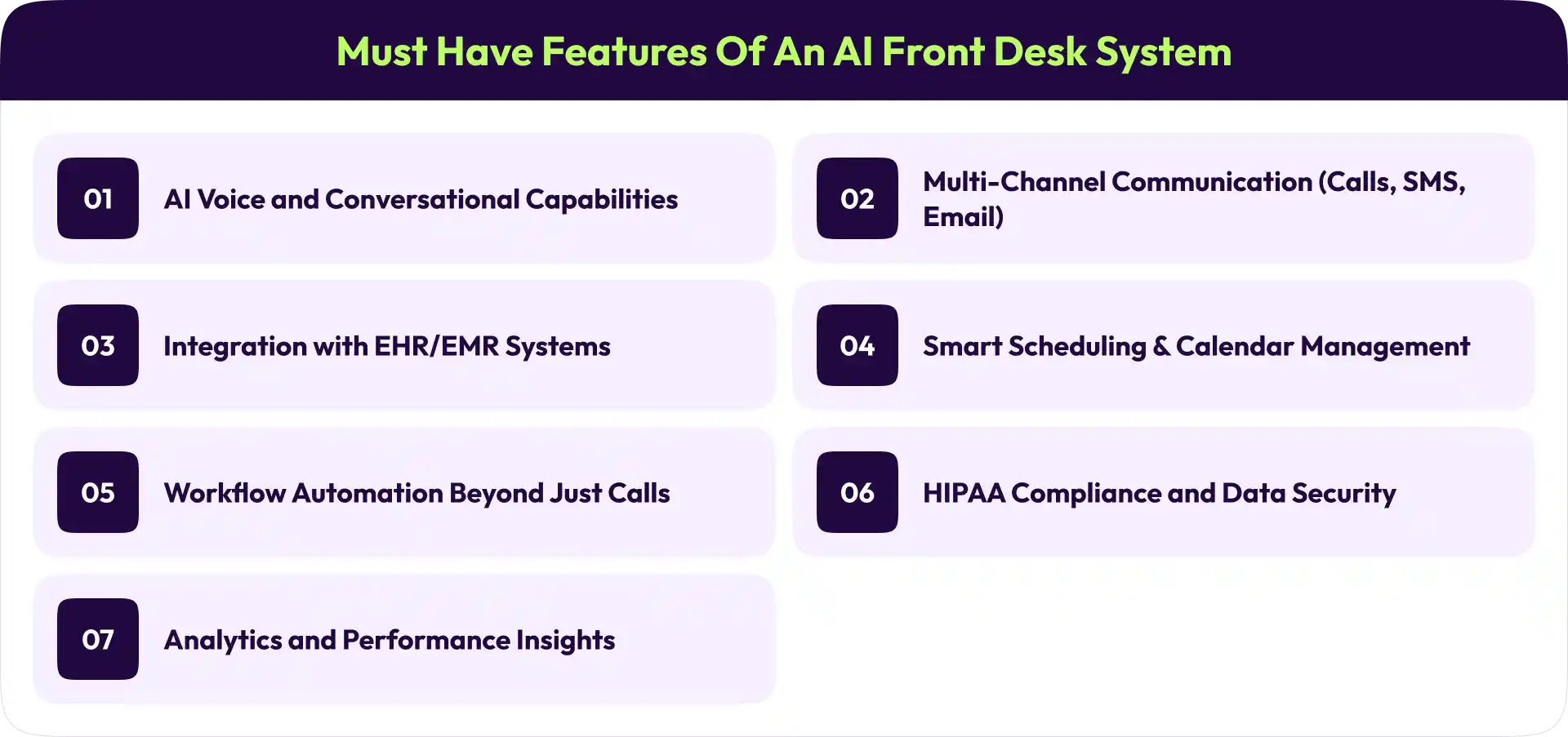
Not all AI solutions are built the same. Choosing the right system is critical not just for automation, but for long-term efficiency, compliance, and patient experience. Here’s what to prioritize:
1. AI Voice and Conversational Capabilities
Your system should be able to handle natural, human-like conversations, not just scripted responses. It should understand patient intent, answer common questions, and guide callers smoothly through booking or inquiries without sounding robotic.
2. Multi-Channel Communication (Calls, SMS, Email)
Patients don’t interact through just one channel anymore. A strong AI system should work across calls, text messages, and emails, ensuring consistent communication and follow-ups wherever the patient prefers.
3. Integration with EHR/EMR Systems
Seamless integration with your existing healthcare systems is essential. This allows real-time access to patient data, appointment history, and availability, ensuring accurate scheduling and reducing manual work.
4. Smart Scheduling & Calendar Management
Look for systems that go beyond basic booking. Features like real-time availability, automated confirmations, rescheduling options, and calendar optimization can significantly improve efficiency and reduce scheduling conflicts.
5. Workflow Automation Beyond Just Calls
The real value of AI lies in what happens after the call. Your system should automate tasks like sending reminders, follow-up messages, document requests, and internal notifications, reducing manual effort across the entire workflow.
6. HIPAA Compliance and Data Security
For clinics targeting the U.S. or handling sensitive data, compliance is non-negotiable. Ensure the platform follows strict data protection standards like HIPAA, with secure data handling and privacy controls built in.
7. Analytics and Performance Insights
A good system should provide clear insights into performance. Metrics like call volume, missed calls, appointment conversions, and patient engagement help you understand what’s working and where to improve.
Choosing the right AI front desk system isn’t just about automation; it’s about creating a smoother, more reliable experience for both your staff and your patients.
Challenges & Considerations
Adopting AI comes with its own set of considerations, and being aware of them helps you make better decisions.
1. Data Privacy & Compliance
Healthcare data is sensitive. Ensure the system is compliant with regulations like HIPAA.
2. Integration with Existing Systems
Your AI solution should integrate smoothly with your current tools to avoid disruptions.
3. Initial Setup & Training
Like any system, AI requires initial configuration and optimization to match your workflows.
4. Change Management for Staff
Staff may resist change initially. Proper training and positioning AI as a support tool help adoption.
5. Handling Complex or Emergency Cases
AI should be able to escalate critical situations to human staff quickly.
6. Maintaining a Human Touch
Automation should not feel robotic. The experience must still feel personal and patient-friendly.
Why AI is the Future of Healthcare Front Desk Operations
The shift toward AI in healthcare is not just a trend, it’s a necessity. Here’s why:
Rising Patient Expectations: Patients expect quick responses, easy booking, and seamless communication similar to other industries.
Ongoing Staff Shortages: Healthcare providers are facing staffing challenges. AI helps fill operational gaps without increasing costs.
Need for Operational Efficiency: Clinics must do more with fewer resources. Automation becomes essential for scaling.
Shift Toward Digital Healthcare Experiences: From telehealth to online bookings, patients are becoming more comfortable with digital interactions.
Data-Driven Decision Making: AI systems provide insights into patient behavior, call trends, and scheduling patterns.
Competitive Advantage: Clinics that adopt AI early can offer faster, smoother experiences, setting them apart from competitors.
How Alris AI Transforms Healthcare Front Desk Operations
Managing calls is just one part of the front desk. What happens after the call follow-ups, reminders, and document collection is where most clinics struggle. Alris AI brings everything into one platform.
Handles patient calls with AI voice agents
Automatically sends follow-up emails and SMS
Answers questions using your clinic’s data
Automates tasks across the entire patient journey
Instead of using multiple tools, clinics can manage everything in one system, saving time and reducing complexity.
Conclusion
Healthcare front desks are under more pressure than ever. Manual processes can’t keep up with rising patient expectations and operational demands. Missed calls, scheduling inefficiencies, and inconsistent follow-ups are no longer acceptable in today’s environment.
AI offers a practical, scalable solution. By automating calls, scheduling, and patient follow-ups, clinics can improve efficiency, enhance patient experience, and unlock new growth opportunities.
The shift has already begun. The question is, how soon will your clinic adapt?
Frequently Asked Questions (FAQs)
1. What is AI for healthcare front desk?
AI for healthcare front desk is a system that automates calls, appointment booking, and patient communication. It works like a virtual assistant, helping clinics manage daily front desk tasks faster and more efficiently.
2. How does AI handle patient calls in clinics?
AI answers calls instantly, understands patient queries, books appointments, and transfers complex cases to staff. It ensures no call is missed, even during peak hours or after clinic hours.
3. Can AI schedule and manage patient appointments automatically?
Yes, AI can check availability, book appointments, send confirmations, and handle rescheduling. It keeps the calendar updated without manual effort.
4. How does AI reduce no-shows in healthcare clinics?
AI sends automated reminders via calls, SMS, or email and allows easy rescheduling. This helps patients stay informed and reduces missed appointments.
5. Is AI for healthcare front desk safe and compliant?
Yes, reliable AI systems follow strict data security standards and support compliance like HIPAA, ensuring patient information is protected.
6. Can small clinics use AI front desk systems?
Yes, small clinics can use AI to handle calls, bookings, and follow-ups without hiring extra staff, improving efficiency at a lower cost.
7. What are the main benefits of using AI in healthcare front desk operations?
AI helps clinics reduce workload, improve response time, increase bookings, and deliver better patient communication across all channels.
Shravan Rajpurohit
CEO & Co-Founder
Shravan Rajpurohit is the Co-Founder & CEO of The Intellify, a leading Custom Software Development company that empowers startups, product development teams, and Fortune 500 companies. With over 10 years of experience in marketing, sales, and customer success, Shravan has been driving digital innovation since 2018, leading a team of 50+ creative professionals. His mission is to bridge the gap between business ideas and reality through advanced tech solutions, aiming to make The Intellify a global leader. He focuses on delivering excellence, solving real-world problems, and pushing the limits of digital transformation.

Stay Updated
with AI Insights
Get the latest articles on AI, automation, and enterprise technology delivered to your inbox weekly.

500+ people have already subsribed!
No spam. Unsubscribe anytime.