
AI Receptionist for Med Spas & Aesthetic Clinics: Benefits and Use Cases


Summary: An AI receptionist for med spas and aesthetic clinics helps manage incoming calls, book appointments, answer routine inquiries, capture potential client details, and automate follow-ups. This guide explores its key features, practical use cases, and benefits for US clinics looking to reduce front-desk workload, improve client communication, and simplify daily operations.
Running a med spa or aesthetic clinic involves more than providing treatments. Your team also needs to answer phone calls, manage appointment requests, respond to treatment inquiries, and follow up with potential clients. When the front desk gets busy, some of these tasks can easily fall behind.
This is a common challenge for med spas across the United States. A potential client might call to ask about Botox, laser hair removal, or a consultation, but if nobody answers, they may simply contact another clinic.
An AI receptionist for med spas can help manage these everyday communication tasks. It can answer incoming calls, handle common questions, assist with appointment bookings, and follow up with callers based on configured workflows.
For aesthetic clinics looking to improve their front-desk operations, this technology offers a practical way to provide more consistent communication without adding the same workload to existing staff.
Let's look at how it works, where it can help, and what med spa owners should consider before adopting one.
What Is an AI Receptionist for Med Spas?
An AI receptionist is a voice-powered system that handles incoming phone calls and routine front-desk interactions. Instead of sending every caller to a human receptionist, the system can understand what someone is asking and respond using conversational AI.
For example, a person calling a medical spa might ask about consultation availability, business hours, treatment services, or appointment scheduling. An AI receptionist can respond using information approved by the clinic and guide the caller toward the next step.
Depending on its capabilities and integrations, it can also:
Check available appointment slots.
Schedule or reschedule appointments.
Capture caller names and contact details.
Answer frequently asked questions.
Send appointment confirmations and follow-up messages.
An AI receptionist for aesthetic clinics is not the same as a basic automated phone menu. Traditional phone systems often ask callers to press numbers to reach a department. Voice AI allows them to explain what they need in their own words.
It also differs from a conventional answering service. Rather than simply taking messages, an integrated AI receptionist can complete certain tasks during the conversation.
Key Features of an AI Receptionist for Med Spas
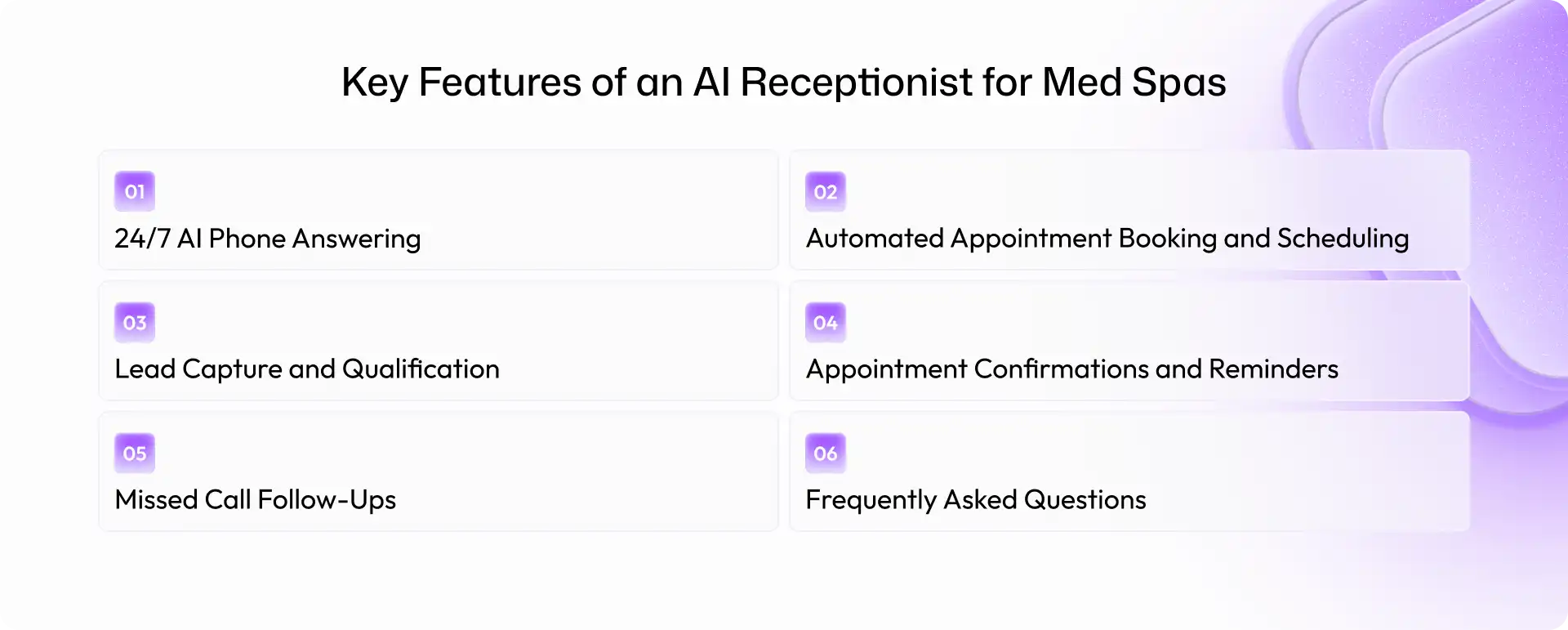
Not every AI receptionist offers the same capabilities. However, a system designed for med spas should support several important front-desk activities.
1. 24/7 AI Phone Answering
One of the most useful features is the ability to answer calls outside regular business hours.
A potential client might call at 8 PM to ask about a consultation or available services. Instead of reaching voicemail, they can speak with an AI receptionist that provides approved information and captures their request.
This helps clinics stay accessible during evenings, weekends, and holidays without requiring someone to remain at the front desk all day.
2. Automated Appointment Booking and Scheduling
Appointment management is a major part of running an aesthetic clinic. An AI receptionist connected to the clinic's scheduling system can check available slots and help callers book appointments based on configured rules.
For example, someone interested in a laser hair removal consultation can ask about availability. The AI can collect the required details, check the calendar, and offer suitable appointment times.
It can also support cancellations or rescheduling when the connected system allows it.
3. Lead Capture and Qualification
Not every caller is ready to book immediately. Some people want to understand available treatments, ask about pricing, or compare consultation options.
An AI receptionist can capture basic details such as:
Name and contact number.
Treatment or service of interest.
Preferred appointment time.
Whether the caller wants a consultation or more information.
This information can be passed to the clinic's CRM or team for follow-up. It gives staff useful context before they contact the potential client.
4. Appointment Confirmations and Reminders
Missed appointments can disrupt a clinic's daily schedule. An AI receptionist connected to an appropriate messaging workflow can send booking confirmations and appointment reminders through supported channels such as SMS or email.
These messages can include appointment dates, times, and instructions approved by the clinic.
Staff can also use automated workflows to remind clients about upcoming consultations or request confirmation when needed.
5. Missed Call Follow-Ups
Sometimes a call cannot be completed because the caller disconnects, the system encounters an issue, or the clinic's team is unavailable.
A configured follow-up workflow can send a message acknowledging the missed call and asking whether the person needs assistance.
For example:
"Hi! We noticed you tried reaching our clinic. Would you like help scheduling an appointment or learning more about our services?"
This creates another opportunity to continue the conversation rather than leaving the inquiry unanswered.
6. Frequently Asked Questions
Med spa teams answer many of the same questions every day. An AI receptionist can respond to approved questions about:
Clinic operating hours and location.
Available treatments and services.
General pricing information.
Consultation booking procedures.
Cancellation and rescheduling policies.
However, it should not provide medical diagnoses, promise treatment outcomes, or replace a qualified professional's advice. Questions involving medical history, contraindications, or treatment suitability should be directed to the appropriate clinical staff.
Why Med Spas and Aesthetic Clinics Need AI Receptionists
Med spas often handle several types of inquiries throughout the day. Some callers want to book a consultation, others need to change an appointment, while some are simply comparing treatment options.
Managing all these conversations manually can become difficult, especially when staff are also helping clients at the front desk.
Missed Calls Mean Missed Business Opportunities
Imagine a potential client calling during a busy afternoon to ask about a Botox consultation. Your receptionist is checking in another client, and the call goes unanswered.
That person may not call again.
The challenge is not limited to business hours. People often research aesthetic treatments in the evening or over weekends, when many clinics have limited phone support.
A 2025 Zenoti survey found that 79% of regular med spa clients had skipped booking because reaching someone or booking online was too difficult. The same research found that 82% were more likely to rebook with a med spa offering 24/7 booking options. These findings highlight how much convenience can influence booking decisions. (Source: Zenoti)
Front Desk Teams Handle Too Many Repetitive Tasks
Front-desk employees do much more than answer calls. They welcome clients, coordinate appointments, handle cancellations, collect information, and respond to questions.
When several calls arrive at once, something has to wait.
An AI receptionist can take care of selected repetitive interactions, giving staff more time to assist people who are physically present at the clinic or need personal attention.
Clients Expect Quick Responses and Convenient Booking
People looking for aesthetic treatments usually compare multiple providers before making a decision. A slow response can make a clinic appear difficult to reach.
According to an American Med Spa Association article reporting US patient survey findings, 57% of respondents expected a reply to an inquiry within an hour, if not instantly. The same article reported that 69% considered a wait of 24 hours or more a negative experience. (Source: AmSpa)
Quick communication matters. An AI receptionist can help clinics respond to routine inquiries even when their front-desk employees are occupied.
Use Cases of AI Receptionists in Med Spas & Aesthetic Clinics
The value of an AI receptionist becomes clearer when we look at everyday clinic scenarios.
Handling Botox and Dermal Filler Inquiries
Botox and dermal filler inquiries often involve questions about consultation availability, pricing, and treatment procedures.
An AI receptionist can answer approved general questions, collect the caller's details, and help arrange a consultation with the clinic.
It should not determine whether someone is suitable for an injectable treatment. That decision belongs to a qualified medical professional.
Booking Laser and Skin Treatment Appointments
Aesthetic clinics may offer several services, including laser hair removal, skin rejuvenation, chemical peels, and other cosmetic treatments.
Callers might not know which appointment type they need.
An AI receptionist can ask what service they are interested in, provide approved general information, and direct them to the appropriate booking option.
This makes the initial scheduling process easier for both the caller and the front-desk team.
Managing After-Hours Consultation Requests
A potential client researching a med spa on Saturday evening might want to schedule a consultation for the following week.
If the clinic does not have phone support at that time, the inquiry may remain unanswered until Monday.
An AI receptionist can handle the initial call, capture the person's preferences, and schedule an appointment if calendar access and booking rules permit it.
Following Up With Potential Clients
Some callers ask questions but do not book during their first conversation. A follow-up workflow can help the clinic reconnect with those leads, provided the communication is appropriate and the person has given any required consent.
For example, someone who requested information about a skin treatment could receive a follow-up asking whether they would like assistance booking a consultation.
The goal is not to keep sending messages. It is to make the next step easier when someone has already shown interest.
Benefits of Using an AI Receptionist for Med Spas
An AI receptionist can improve several parts of a med spa's daily operations. Here are the main benefits:
Fewer unanswered calls: Calls can be handled even when staff is busy or the clinic is closed.
Faster responses: Callers receive immediate assistance with routine questions instead of waiting for someone to become available.
Less repetitive work: Staff spend less time answering the same questions and collecting basic information.
Convenient appointment scheduling: Callers can explore available slots without always needing to speak with a receptionist.
Consistent communication: Approved responses help maintain a consistent experience across common inquiries.
Better lead visibility: Captured caller information helps staff understand who contacted the clinic and what they need.
These benefits do not mean a clinic should remove its human front desk. In fact, the best approach is often to let AI handle routine tasks while employees focus on situations that need personal attention.
AI Receptionist vs. Traditional Med Spa Answering Service
Traditional answering services and AI receptionists both help clinics manage incoming calls. However, they work differently.
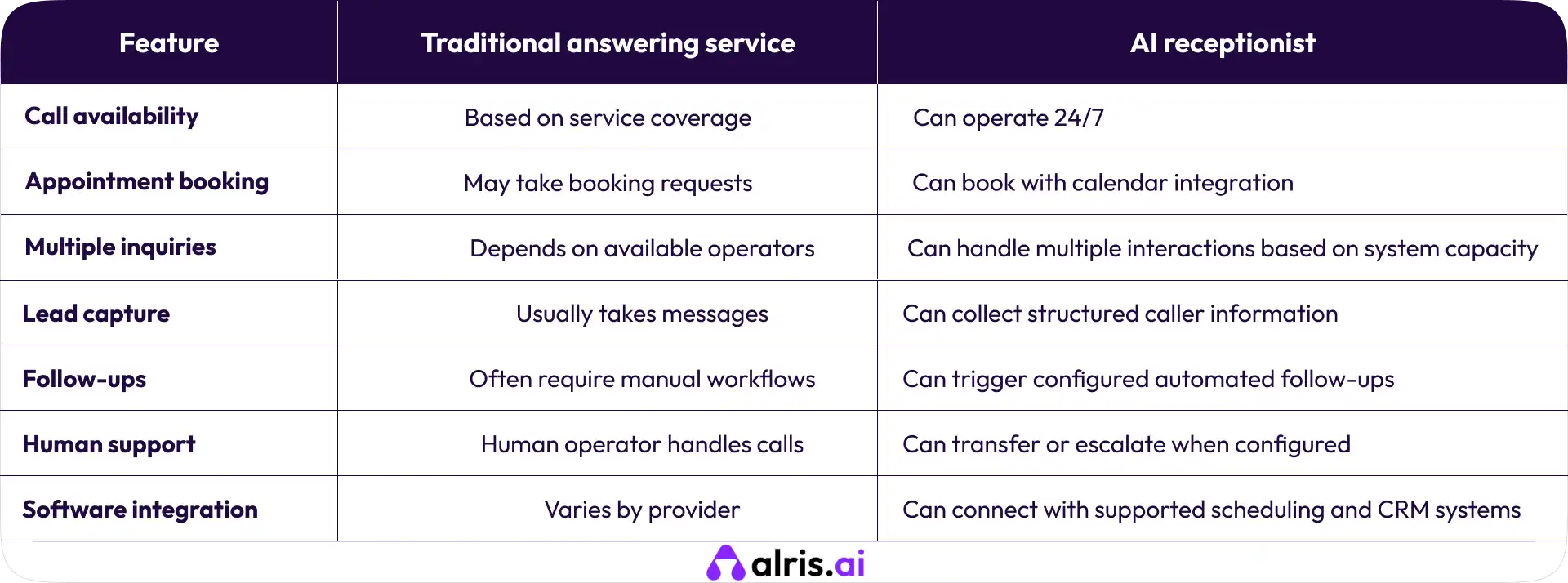
A traditional answering service still has an important role, particularly when callers need human interaction or more complex assistance.
An AI receptionist is useful when a clinic wants to automate repetitive conversations and connect phone calls with its scheduling and follow-up processes.
The two approaches can also complement each other. AI can handle routine calls, while human staff step in whenever the situation requires judgment or personal care.
HIPAA Compliance and Data Security: What Med Spas Should Know
Med spas should consider privacy and data security before introducing an AI receptionist.
HIPAA does not automatically apply to every business that calls itself a med spa. Whether a clinic is a covered entity depends on its activities and applicable requirements, including whether it conducts certain electronic healthcare transactions.
When HIPAA applies, the clinic must consider how its AI receptionist handles protected health information (PHI).
If a technology provider creates, receives, maintains, or transmits electronic PHI on behalf of a covered entity, it may qualify as a business associate. A HIPAA-compliant Business Associate Agreement (BAA) may therefore be required.
The US Department of Health and Human Services explains these responsibilities in its HIPAA cloud computing guidance.
Before implementation, clinics should review data storage, access controls, encryption, retention policies, vendor agreements, and security practices.
It is also sensible to keep the AI focused on administrative tasks rather than collecting unnecessary medical details or providing clinical advice.
How to Choose the Right AI Receptionist for Your Med Spa
Choosing a MedSpa AI receptionist is not just about finding a system that sounds natural on the phone. It should fit the way your clinic actually operates. Consider these factors before making a decision:
Voice quality: Can callers understand the AI easily? Does the conversation feel natural?
Appointment integration: Can it access your scheduling platform and follow your booking rules?
Custom workflows: Can you configure responses for different treatments, locations, and appointment types?
Human handoff: Can it transfer calls when a caller needs assistance from a staff member?
Reporting: Can you review call activity, missed calls, bookings, and follow-up outcomes?
Privacy and security: Does the provider support the safeguards and agreements your clinic requires?
It is also worth testing the system with real-world scenarios before using it for every incoming call.
Ask it about appointment changes, unavailable slots, treatment inquiries, and situations where it should transfer the caller. These small tests can reveal problems before they affect the client experience.
Final Thoughts
Managing calls, bookings, and follow-ups can take up a surprising amount of time in a busy med spa. An AI receptionist can help handle routine communication, capture inquiries, and make appointment scheduling more convenient.
For US med spas and aesthetic clinics, the real value is not replacing the front desk. It is giving staff more time to focus on clients while ensuring routine calls and requests do not get overlooked.
The right solution should fit the clinic's existing workflows, integrate with its software, and keep privacy and human support in mind.
Frequently Asked Questions About AI Receptionists for Med Spas
1. Can an AI receptionist book med spa appointments?
Yes. An AI receptionist can book appointments when connected to a compatible scheduling system and configured with the clinic's availability, booking rules, and appointment types.
2. Can AI receptionists answer calls 24/7?
Yes. Many AI receptionist systems can answer calls around the clock, including evenings, weekends, and holidays. Availability depends on the provider and system configuration.
3. Are AI receptionists HIPAA compliant?
Not automatically. HIPAA compliance depends on how the technology is used, what information it handles, and whether the provider meets applicable requirements. Clinics should review vendor safeguards and BAAs where required.
4. Can an AI receptionist handle aesthetic clinic inquiries?
Yes. It can answer approved general questions about services, operating hours, pricing information, and consultation booking. Medical questions and treatment suitability decisions should be handled by qualified clinical professionals.
Shravan Rajpurohit
CEO & Co-Founder
Shravan Rajpurohit is the Co-Founder & CEO of The Intellify, a leading Custom Software Development company that empowers startups, product development teams, and Fortune 500 companies. With over 10 years of experience in marketing, sales, and customer success, Shravan has been driving digital innovation since 2018, leading a team of 50+ creative professionals. His mission is to bridge the gap between business ideas and reality through advanced tech solutions, aiming to make The Intellify a global leader. He focuses on delivering excellence, solving real-world problems, and pushing the limits of digital transformation.

Stay Updated
with AI Insights
Get the latest articles on AI, automation, and enterprise technology delivered to your inbox weekly.

500+ people have already subsribed!
No spam. Unsubscribe anytime.