
Why Texas Dental Clinics Lose New Patients to Unanswered Calls


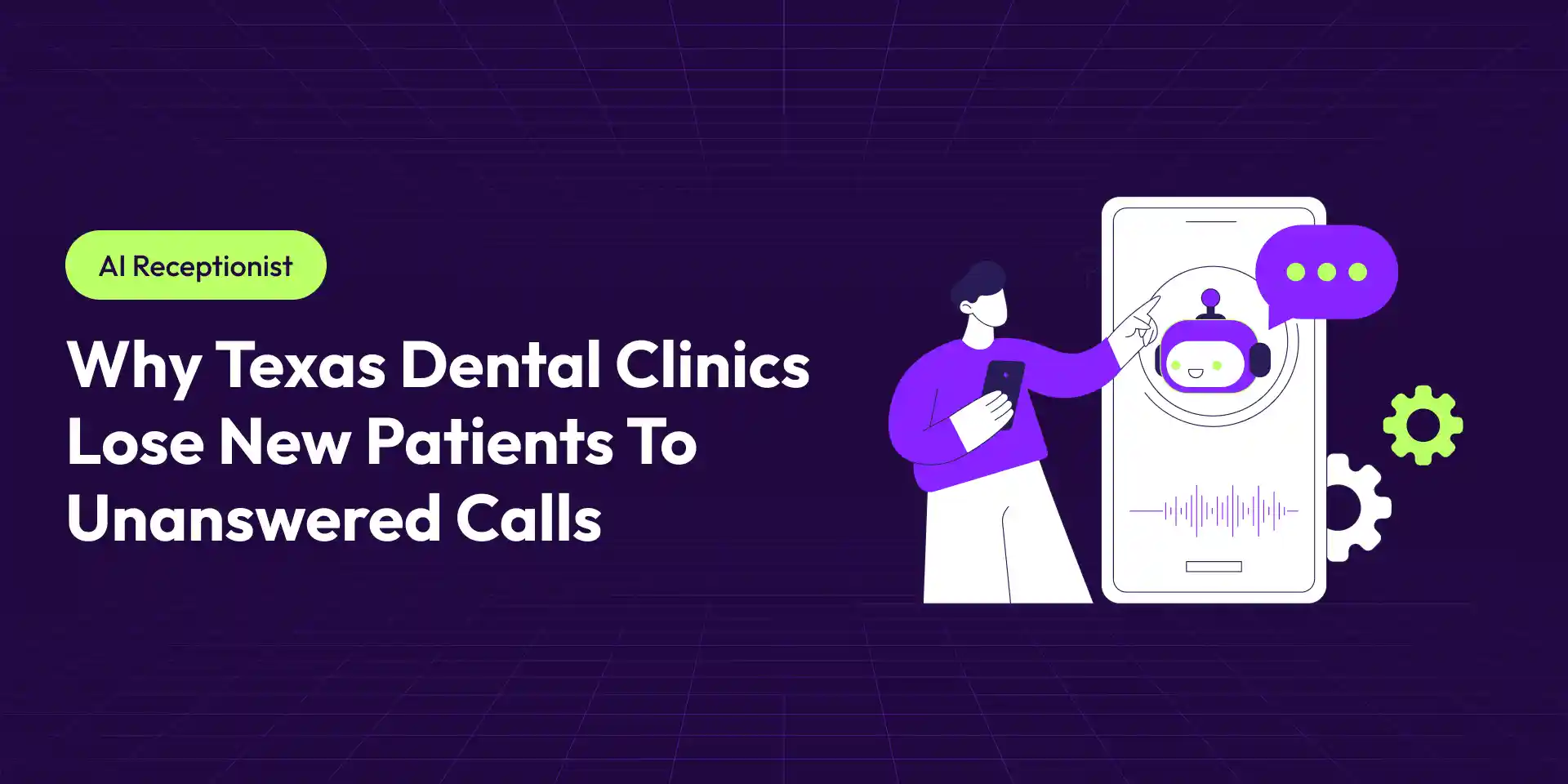
Summary: Texas dental clinics miss up to 40% of patient calls daily, costing practices over $50,000 a year in lost patients. This article breaks down when calls are missed, what it costs, and how AI dental receptionist is helping practices in Austin, Dallas, Houston, and San Antonio answer every call and book more patients without adding staff.
Your front desk is not failing. The phone is just losing. Think about what a dental receptionist is actually managing between 9 and 11 am on a busy Thursday. A patient is checking in. Another one has a question about their insurance estimate. The hygienist just asked if the 10:15 chart is pulled. The doctor is running seven minutes behind. And then the phone rings.
Nobody picks up. The person calling was ready to book her first appointment. She found your practice through Google, saw four-and-a-half stars, and decided to call. When nobody answered, she did not leave a voicemail. She called the next result on the list, and that person answered on the second ring.
She will not call your practice again. This is not a story about a bad receptionist. It is a story about a structural problem that affects nearly every dental practice in the country, and in Texas, with 11,223 active dental practices competing for patients across major metro areas, the cost of that problem compounds fast. An AI receptionist for dentists is changing how forward-thinking Texas practices handle this gap, and the results are measurable from week one.
How Many Calls Is Your Practice Actually Missing?
Most dental practice owners have a rough sense that they miss some calls. Almost none of them know exactly how many, because missed calls are invisible in your production reports. They never became appointments. They never became patients. They simply do not show up.
The Medical Group Management Association surveys thousands of medical and dental practices on operations and patient access. Their data shows that practices miss between 25% and 40% of inbound calls during business hours, with phone access ranking as the number one patient access priority heading into 2026.
For context: if your practice receives 50 calls on an average weekday, you are missing 12 to 20 calls every single day. Those gaps concentrate in three specific windows: the morning treatment block, the lunch hour, and after 5 pm, which are also the three periods when patients are most actively trying to reach you.
What Unanswered Calls Are Actually Costing Your Practice
The math on missed calls is worth sitting with, because it does not show up in your P&L in any obvious way.
Each missed new patient call carries a lifetime value
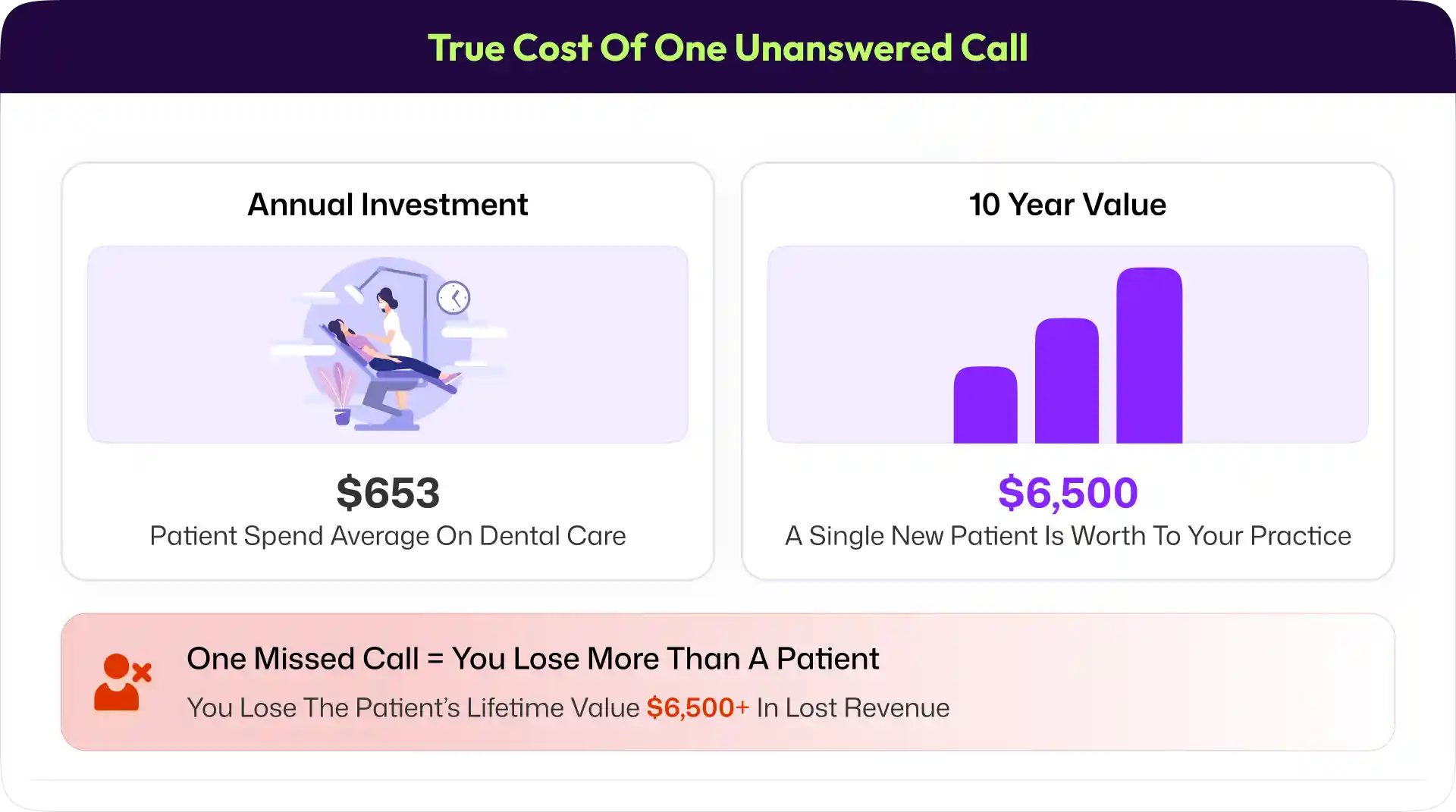
According to the American Dental Association's Health Policy Institute, patients spend an average of $653 per year on dental care. Over a 10-year patient relationship, a single new patient is worth approximately $6,500 to your practice.
Research from Invoca found that 74% of people who have a negative phone experience are likely to choose a competitor instead. Healthcare ranked among the top three industries where consumers most want to reach a live person on their first call. That is not a deferred booking. That is a lost patient and a lost $6,500.
The callback window closes faster than most practices realize
Even if a patient leaves their number, the conversion window is narrower than most dental teams assume. Harvard Business Review research shows that reaching a potential customer within one hour of their first contact makes a meaningful conversion 60 times more likely than waiting 24 hours or more.
A dental practice returning voicemails the next morning is almost certainly outside that window. Many of those patients have already booked elsewhere by 9 am.
The weekly revenue gap adds up silently
Run the numbers on a practice receiving 60 new patient inquiry calls per month. At a 30% miss rate, that is 18 unanswered calls per month. If 40% of those callers had booked, that is roughly 7 new patients per month who never made it onto your schedule. At an average annual value of $653, that is $4,571 in first-year revenue, leaving over $54,000 per month from calls that nobody answered.
Recall and reactivation calls slip too
It is not only new patients calling. Existing patients call to reschedule, ask about treatment, or check on a balance. When those calls go unanswered, the appointment often falls off the schedule entirely. Becker's Dental Review reports that dental practices average no-show rates of 15% to 20%, and inconsistent follow-up with patients who intend to reschedule is a consistent contributing factor to appointments that never come back.
The Three Windows Where Texas Dental Practices Lose the Most Calls
1. The morning treatment block (9 am to 12 pm)
This is when your chairs are full, your hygienists are running, and your front desk is managing several things at once. It is also when a significant share of your daily call volume arrives from patients squeezing in a quick call before their workday gets busy. The phone rings. Nobody answers. Nobody knows.
2. The lunch hour (12 pm to 1 pm)
Most dental practices reduce coverage during lunch. Most patients who work 9 to 5 use their lunch break to make healthcare calls. The result is a daily overlap where your lowest-staffing window coincides exactly with a high-intent call window, one of the most preventable sources of missed calls in any dental practice.
3. After business hours
Research from Zippia shows that 41% of all patient calls to healthcare practices arrive outside standard weekday business hours. Patients calling about tooth pain, a broken crown, or an urgent cosmetic concern in the evening are your highest-intent contacts. If your phone goes to voicemail at 7 pm, most of those patients are not calling back tomorrow. They are booking with whoever answered tonight.
What Top Texas Dental Practices Are Doing Differently in 2026
The practices in Austin, Dallas, Houston, and San Antonio that have solved their missed call problem did not do it by hiring a second receptionist. More headcount does not fix the structural gap. A new hire cannot answer the phone at 7 pm, cannot handle three simultaneous calls, and cannot consistently cover the lunch hour every day. The gap remains.
What is changing is dental front desk automation, specifically, AI voice agent systems built for dental practices that answer inbound calls when the team cannot, conduct full patient intake conversations, and book directly into the practice management system in real time, 24 hours a day.
24/7 coverage with no overtime cost
An AI receptionist for dentists does not clock out. A patient calling at 8:30 pm on Wednesday gets the same response speed as a patient calling at 10 am on Monday. No voicemail. No "please call back during business hours." The patient books the appointment, lands in Dentrix, Eaglesoft, or Open Dental, and your front desk sees a confirmed appointment the next morning.
Handling multiple calls simultaneously
When three patients call during a morning block while your receptionist is managing a check-in, a virtual receptionist for dental clinics handles all three at the same time, with no hold time, no dropped calls, and no drop in quality. You stop choosing which calls get answered and start answering all of them.
Bilingual English and Spanish intake
The U.S. Census Bureau estimates that 28.5% of Texans speak Spanish at home, nearly 7.8 million people statewide. In San Antonio, Houston's east side, the Rio Grande Valley, and El Paso, that percentage is significantly higher. A dental practice that completes a full intake conversation in Spanish from the first call captures a meaningfully larger share of that patient population than one that relies on a press-2 option or a staff member who is not always available.
Automated reminders for no-shows
A randomized controlled trial published in The American Journal of Medicine followed 9,835 patients and found that automated appointment reminders reduced no-show rates from 23.1% to 17.3%. For a dental practice running 80 appointments per week, that improvement means five to six additional kept appointments every week, roughly $52,000 to $62,000 in recovered annual production from one automated workflow running in the background.
Before vs. After: What Actually Changes
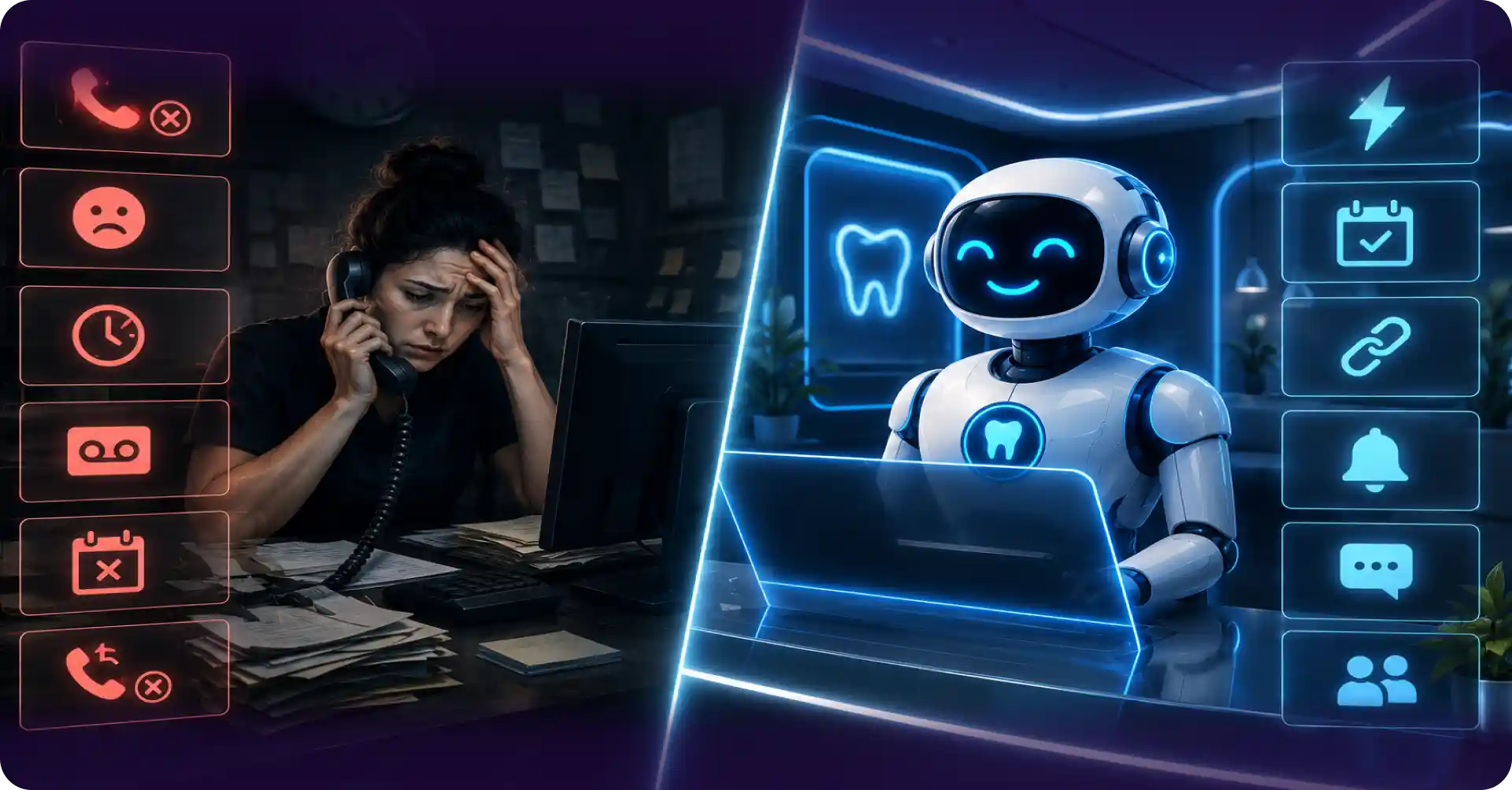
Before dental front desk automation
25-40% of inbound calls go unanswered during peak hours and after close
74% of patients who have a bad phone experience choose another provider
Callbacks happen the next morning, past the 1-hour conversion window
41% of daily call volume goes to voicemail after hours
No-show rates stay at 15-20% due to inconsistent reminders
The front desk starts every morning by returning calls from patients who have already booked elsewhere
After implementing a dental AI receptionist
Every call answered in under one second, 24 hours a day, 7 days a week
New patients book from their first call, including evenings and weekends
Real-time integration with your dental appointment scheduling software
Automated reminders cut no-shows on autopilot, recovering chair time every week
Spanish-speaking patients complete full intake without transfers or delays
Front desk bandwidth shifts from callbacks to in-person patient care
What to Look for in a Dental AI Receptionist Before You Commit
Real-time integration with your dental appointment scheduling software
The system must book appointments into your live calendar directly, not send a message to your team to handle. Ask specifically whether it connects in real time with Dentrix, Eaglesoft, Open Dental, or Curve Dental. "We sync nightly" is not real-time integration and leaves a gap in the patient experience.
HIPAA compliance and a signed Business Associate Agreement
Any system handling patient intake information over the phone is touching Protected Health Information. The vendor must sign a BAA before go-live, not after, not "upon request." If they hesitate on this, you have your answer.
Proven dental call answering service experience
General AI phone platforms are not the same as systems built specifically for dental intake workflows. Look for documented experience handling new patient registration, insurance pre-verification questions, hygiene recalls, and post-op follow-ups, not generic business case studies.
Clear escalation path to your team
When a patient is in pain or has a complex question, they need a real person fast. Confirm how escalation works: does your team receive the call with full context already captured, or does the patient repeat everything from the beginning? That one detail determines whether patients feel taken care of or frustrated.
The Future of Dental Front Desk Automation in Texas
The voice AI systems available to dental practices in 2026 are meaningfully more capable than those that existed even two years ago. Voice quality has improved to the point where most patients cannot distinguish an AI intake call from a live staff conversation. Real-time integration with practice management systems has become standard rather than a premium add-on. And the cost gap between AI coverage and additional headcount has widened significantly. Over the next 12 to 18 months, a few shifts are worth watching.
1. Bilingual AI coverage will become table stakes in Texas markets with high Spanish-speaking populations practices that do not offer it will notice a measurable gap in new patient conversion from those communities.
2. Integration between AI phone systems and patient insurance verification is maturing fast. Practices that can pre-verify insurance in real time during the first call will reduce front-desk workload and increase case acceptance from new patients who currently drop off when they cannot get an immediate answer on coverage.
3. The data these systems generate, call volumes by hour, booking conversion rates, and most common patient questions, is becoming a meaningful operational tool for practice administrators who want to make staffing and scheduling decisions based on actual call behavior rather than estimates.
Texas dental practices that adopt dental front desk automation now are building a structural advantage that compounds over time. Every answered call that becomes a booked patient adds to a foundation that their competitors are still leaving on the table.
Conclusion
Missed calls are the most expensive invisible problem in a dental practice. They do not show up in your production reports, your collection numbers, or your monthly overhead review. They show up as patients you never had patients who called once, got voicemail, and booked down the street.
For Texas dental practices competing in one of the most active dental markets in the country, the difference between a practice that answers every call and one that misses 30% of them is not a minor operational gap. Over the course of a year, it is tens of thousands of dollars in lost first-year revenue, patients who chose a competitor, and chair time that stayed empty because a reminder never went out.
An AI receptionist for dentists is no longer a futuristic technology. It is operating in dental practices across Austin, Dallas, Houston, and San Antonio right now. The practices using it are answering every call, booking after-hours appointments, handling Spanish-language intake natively, and recovering no-show chair time through automated reminders, all without adding a single headcount.
The gap between practices that have solved this and those that have not is growing. The good news is that it takes less than a week to close it.
Frequently Asked Questions (FAQs)
1. How many calls does the average Texas dental practice miss each day?
The Medical Group Management Association reports that practices miss between 25% and 40% of inbound calls during business hours. For a practice receiving 50 calls per day, that is 12 to 20 missed patient opportunities every single day. The three highest-risk windows are the morning treatment block, the lunch hour, and evenings after 5 pm, exactly when patients are most actively trying to reach a dental office.
2. What does a missed new patient call actually cost a dental practice?
The American Dental Association estimates patients spend $653 per year on dental care, roughly $6,500 over a 10-year relationship. Research from Invoca found that 74% of patients who experience a negative phone interaction choose a different provider. A missed call from a new patient does not just defer a booking. It typically means losing that patient and their full lifetime value entirely.
3. Do automated appointment reminders actually reduce no-shows for dental practices?
Yes. A randomized controlled trial in The American Journal of Medicine followed 9,835 patients and found that automated reminders reduced no-show rates from 23.1% to 17.3%. For a dental practice running 80 appointments per week, that improvement recovers five to six additional kept appointments every week, approximately $52,000 to $62,000 in recovered annual production from one automated reminder workflow.
4. Can a dental AI receptionist handle Spanish-speaking patients in Texas?
The best AI receptionist systems for dentists conduct complete intake conversations in Spanish from start to finish, not just a press-2 transfer option. This matters in Texas because the U.S. Census Bureau estimates 28.5% of Texans speak Spanish at home, roughly 7.8 million people. Practices in San Antonio, El Paso, and the Rio Grande Valley regularly receive a high volume of Spanish-language calls.
5. How is a dental AI receptionist different from a traditional call answering service?
A traditional dental call answering service takes a message and emails your team to call back, usually the next morning. An AI receptionist for dentists books the appointment in real time during the first call using your dental appointment scheduling software. Harvard Business Review found that waiting 24 hours collapses conversion rates compared to responding within one hour. The AI closes the booking before the patient hangs Should up.
6. How quickly can a Texas dental practice go live with Alris AI?
Most Texas dental practices go live with Alris in one to three business days. No custom scripting is required, no lengthy implementation, and no disruption to your existing front desk workflow. Your team continues handling the calls they want to handle. Alris covers the rest 24/7, in English and Spanish, with real-time integration into your dental appointment scheduling software.
Sources & References:
1. Medical Group Management Association (MGMA)
2. American Dental Association (ADA), Health Policy Institute
3. Invoca. State of the Mobile Experience. Referenced by Spruce Health
4. Oldroyd, J.B., McElheran, K., & Elkington, D. Harvard Business Review, March 2011
5. The American Journal of Medicine, 2010;123(6):542-548. PMID: 20569761
Shravan Rajpurohit
CEO & Co-Founder
Shravan Rajpurohit is the Co-Founder & CEO of The Intellify, a leading Custom Software Development company that empowers startups, product development teams, and Fortune 500 companies. With over 10 years of experience in marketing, sales, and customer success, Shravan has been driving digital innovation since 2018, leading a team of 50+ creative professionals. His mission is to bridge the gap between business ideas and reality through advanced tech solutions, aiming to make The Intellify a global leader. He focuses on delivering excellence, solving real-world problems, and pushing the limits of digital transformation.

Stay Updated
with AI Insights
Get the latest articles on AI, automation, and enterprise technology delivered to your inbox weekly.

500+ people have already subsribed!
No spam. Unsubscribe anytime.