
Voice AI for Restaurants: Handle Calls, Take Orders & Manage Reservations [2026]



![Voice AI for Restaurants: Handle Calls, Take Orders & Manage Reservations [2026]](https://alris-ai-cms.theintellify.net/uploads/Voice_AI_for_Restaurants_1x_421657b1fd.webp)
Summary: Restaurants miss more calls than they realise, and every missed call is a reservation or order that didn't happen. This guide covers how restaurant voice AI answers every inbound call, takes phone orders accurately, and manages reservations automatically, without pulling staff away from the floor. From quick service to fine dining, here's how it works and what to look for before choosing a platform.
Friday night, 7 pm. The dining room is packed, the kitchen is firing on all cylinders, and the phone won't stop ringing. The host is seating a table. The server closest to the phone is mid-order. Nobody picks up.
That call? Probably a reservation. Maybe a takeaway order. Either way, it's gone.
This happens in restaurants every single day, and most owners underestimate how much it's actually costing them. A missed reservation is a table that stays empty. A missed order is revenue that walks straight to a competitor. And a customer who called and got nothing voicemail, hold music, or just ringing out rarely calls back.
Voice AI is changing this, not in a sci-fi way, but in a practical, this-actually-works way. It answers every call, takes orders, handles reservation requests, and responds to common questions automatically, without pulling a single staff member away from the floor.
This guide covers how voice AI works in a restaurant setting, what it can realistically handle, and where it makes the most difference. Whether you run a single cafe or a group of restaurants, the problems here will be familiar.
The Restaurant Phone Problem
How many calls restaurants actually miss
During a busy service, front-of-house staff simply can't answer the phone. It's not laziness; it's math. One person can't seat a guest, take a drink order, and answer a call at the same time. So the phone rings out. Or it gets answered, rushed, and the order gets written down wrong.
Studies on restaurant call handling consistently show that a significant portion of calls during peak hours go unanswered. For a restaurant doing decent volume, that's not an occasional inconvenience; it's a recurring revenue leak.
And it's not just the missed calls themselves. It's the knock-on effect. A customer who can't get through during the dinner rush doesn't wait. They open a different tab and book somewhere else.
Why traditional solutions don't work
Hiring more front-of-house staff to handle phones is expensive and doesn't actually fix the problem; busy periods still create bottlenecks, and a dedicated phone person is hard to justify outside of peak hours.
Call answering services are generic. They don't know your menu, your booking system, or how you handle special requests. They take a message and pass it on, which means someone still has to call back.
Basic IVR: "press 1 for reservations, press 2 for orders" is better than nothing, but it frustrates customers and rarely connects them with what they actually need. Most people hang up within the first menu.
What Is Voice AI for Restaurants?
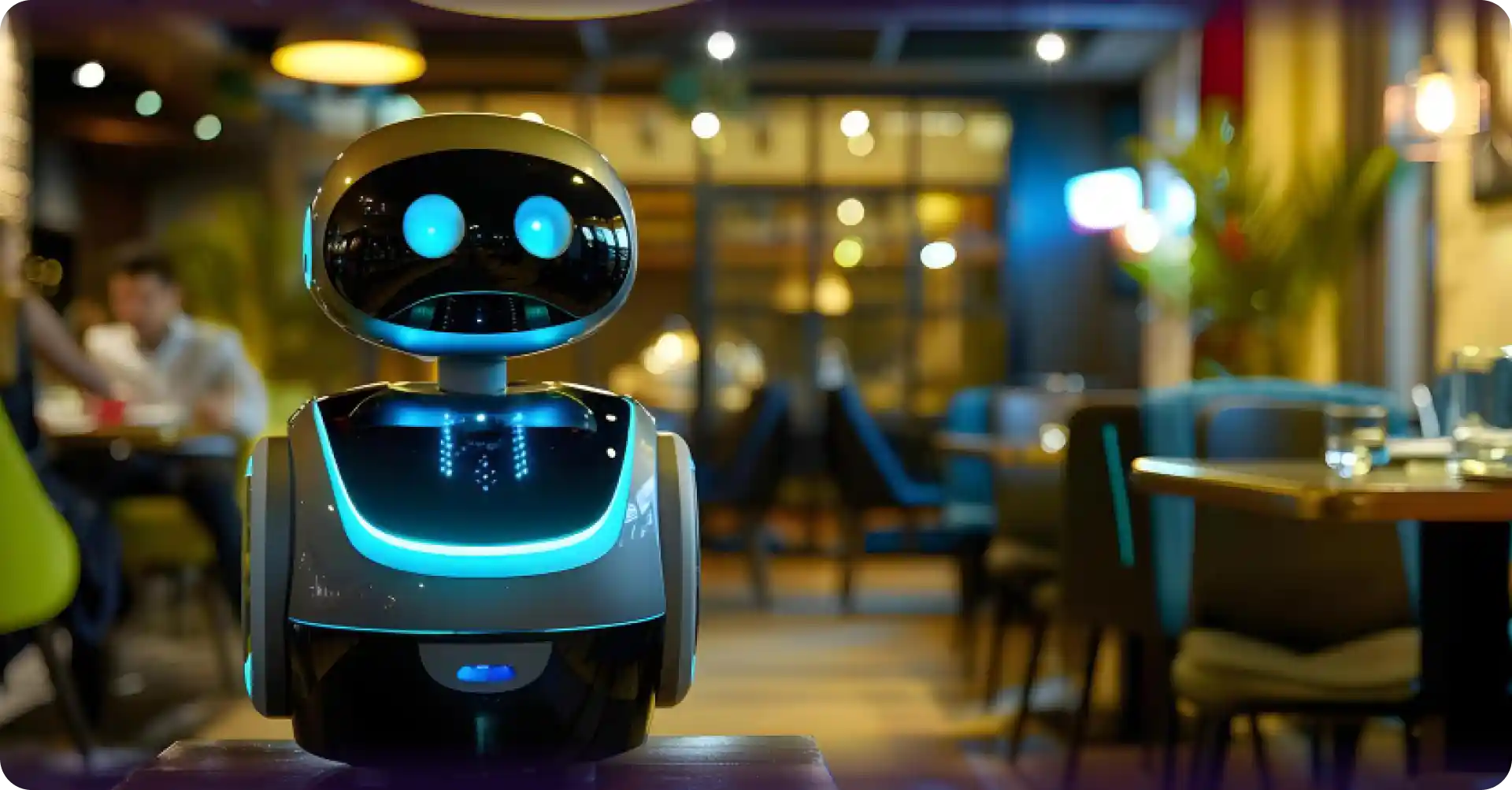
Voice AI for restaurants is software that answers inbound phone calls, understands what the customer is asking, and handles the request, booking a table, taking a food order, or answering a question about the menu in a natural, conversational way.
It's not a phone tree. It's not a pre-recorded message. It's a system that actually listens to what the caller says and responds accordingly, the same way a well-trained staff member would.
How it differs from a phone menu or IVR system
IVR presents options. Voice AI holds a conversation. The difference matters because real customers don't communicate in menu options; they say things like "I'd like to book a table for four on Saturday evening" or "do you do gluten-free pasta?" IVR can't handle that. Voice AI can.
How it differs from a basic chatbot or online booking widget
Online booking tools handle customers who are already on your website and ready to book. Voice AI handles the ones who pick up the phone, which is still a large share of customers, particularly older demographics and anyone who wants to ask a question before committing.
A chatbot handles text. Voice AI handles calls. They solve different problems.
What voice AI can and can't do
It handles calls well: reservations, phone orders, common questions about hours, location, menu, allergens, and specials. It manages cancellations, rescheduling, and waitlist additions without any staff involvement.
What it still can't replace: handling an angry customer complaint with real empathy, managing a complex event enquiry with lots of back-and-forth, or making a judgment call on something genuinely unusual. Those still need a person, and a good voice AI system knows when to hand off.
How Voice AI Works in a Restaurant Setting
The workflow is pretty clean once you see it laid out:
Customer Calls: the phone rings
↓
Voice AI Answers Instantly: no hold time, no "please wait", just a natural greeting.
↓
Understands the Request: reservation, order, question, or something else
↓
Takes Action: books the table, logs the order, answers the query
↓
Confirmation Sent: SMS or email to the customer immediately.
↓
CRM / POS Updated Automatically: no manual entry, no transcription needed
↓
Follow-up Triggered: reminder before the reservation, feedback request after the visit
How it handles simultaneous calls during peak hours
This is the part that makes the biggest practical difference. During Friday dinner service, five calls might come in within ten minutes. Voice AI handles all five simultaneously. Each caller gets answered immediately. No queue, no wait, no missed calls while another conversation is finishing.
How it manages unanswered questions and escalates to staff
When something comes up that the AI can't handle an unusual request, a complaint, something genuinely needing a human decision it flags the call and transfers it to a staff member with context already captured. The person doesn't have to explain the situation from scratch.
Handle Calls: Never Miss a Restaurant Call Again
Answering every call, even during the dinner rush
Every inbound call gets answered immediately, regardless of what's happening on the floor. No hold music. No voicemail. Just a response.
For restaurants, this alone changes things. The calls that used to disappear during service now get handled. The customer who was going to give up and book somewhere else actually gets a reservation confirmed.
Handling high call volumes simultaneously
Ten people calling at once during a Saturday lunch rush isn't a problem anymore. Voice AI handles them in parallel without any drop in quality or response time. Each caller gets the same experience as if they'd called on a quiet Tuesday morning.
After-hours call handling
A lot of reservation calls come in outside opening hours: people planning on a Sunday evening, or calling during work hours when the restaurant is between services. Voice AI handles these without anyone staying late or coming in early. The booking gets captured, the confirmation goes out, and it's in the system by the time the team arrives.
FAQ handling: hours, location, menu, allergens
"What time do you close on Sundays?" "Do you have a kids' menu?" "Is your pasta gluten-free?" These questions eat up staff time during service. Voice AI handles them automatically, every time, without pulling anyone away from a table.

Take Orders: AI That Gets the Order Right
Phone order handling with voice AI
The AI takes the order conversationally "I'd like a large margherita and a portion of garlic bread" confirms it back to the customer, and logs it directly. No writing things down, no miscommunication between the phone and the kitchen.
Integration with POS systems
Orders go straight into the POS system the moment they're confirmed. No manual re-entry, no "I thought they said extra cheese, no cheese." The kitchen sees exactly what was ordered.
Handling modifications and special requests
"No onions on the burger." "Extra sauce on the side." "Can I swap the fries for a salad?" Voice AI handles these during the call, confirms them back, and logs them accurately. Modification errors are one of the most common sources of customer complaints in takeaway; this cuts them significantly.
Upselling during the order call
When a customer places an order, the AI can prompt naturally, "Would you like to add a dessert?" or "We have a meal deal that includes a drink for an extra two pounds." It's not pushy. It's the same thing a well-trained staff member does, just consistently, every single call.
Manage Reservations: Bookings Without the Back-and-Forth
Taking reservations over the phone automatically
The customer calls, says they want a table for six on Thursday at 8 pm, and the AI checks availability in real time, confirms the slot, and books it. The whole thing takes under a minute. No callback, no "let me check and get back to you."
Reservation reminders and confirmations via SMS
A confirmation text goes out immediately after the call. A reminder follows the day before with an option to confirm, cancel, or reschedule directly from the message. No-show rates drop when customers get a reminder they can actually respond to.
Handling cancellations and rescheduling
When someone cancels, the table gets freed up immediately and becomes available for rebooking. If they want to move to a different night, the AI checks availability and handles the change on the spot. No staff involvement, no gap in the booking system.
Managing waitlists during busy periods
When a preferred time is fully booked, the AI adds the customer to a waitlist and contacts them automatically if a spot opens up. Customers who would have just called back repeatedly or given up get handled without anyone monitoring the list manually.
Voice AI and the Full Restaurant Communication Stack
Connecting voice with SMS and email
Every call generates an automatic follow-up. Reservation confirmation via text. Order confirmation with estimated time. Reminder the day before. These happen without anyone on the team manually sending messages; they're triggered by the call itself.
CRM and customer history
Returning customers get recognised. If someone calls from a number already in the system, the AI can greet them by name, reference their last visit, and personalise the interaction. That kind of detail matters; it's the difference between feeling like a regular and feeling like a number.
Integration with reservation and POS platforms
Restaurant voice AI works best when it connects with the tools already in use: reservation platforms, POS systems, CRM software. Data flows between them automatically so there's no manual transfer and no risk of information getting lost between systems.
Key Benefits of Voice AI for Restaurants
1. Never Miss a Reservation or Order Call
The most direct benefit. Every call that used to disappear during a busy service now gets answered and handled.
2. Reduce No-Shows With Automated Reminders
Reminder messages with a confirm or cancel option give customers an easy way to respond, which means fewer people who simply forget and don't show up.
3. Free Up Front-of-House Staff During Peak Hours
Staff stop being pulled away from in-restaurant guests to answer the phone. Their attention stays where it matters most.
4. Handle After-Hours Calls Without Extra Staff
Reservations and orders come in outside opening hours without anyone needing to be available to take them.
5. Reduce Order Errors Through Automatic Confirmation
Orders get confirmed back to the customer before logging, which catches mistakes before they reach the kitchen.
6. Increase Revenue From Calls That Would Have Gone Unanswered
Every missed call during service is potential revenue lost. Answering them all automatically recaptures that.
7. Consistent Customer Experience Every Call
Doesn't matter if it's a quiet Tuesday or a packed Saturday night; every caller gets the same prompt, professional response.
Voice AI for Different Restaurant Types
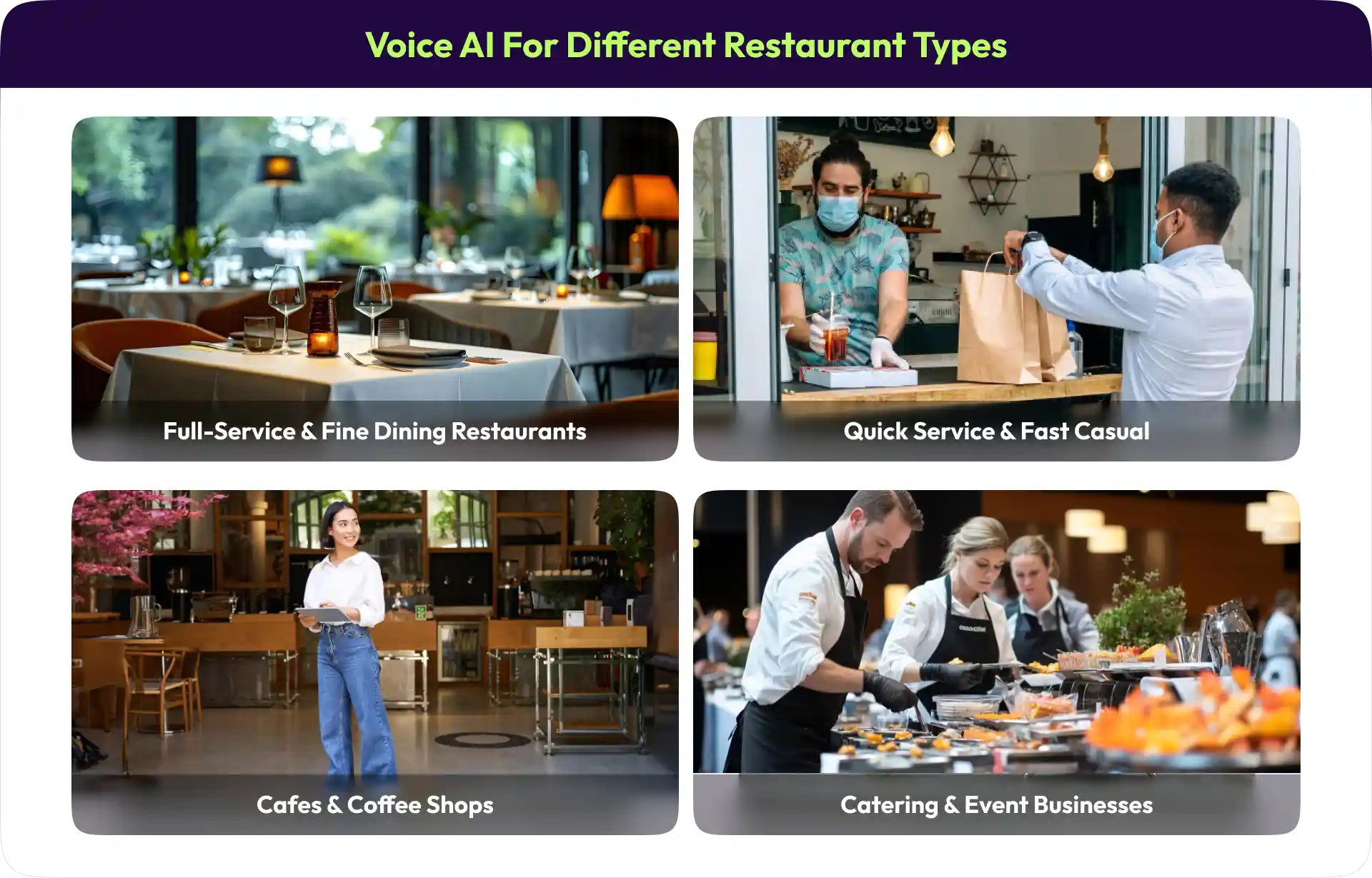
Full-Service and Fine Dining Restaurants
Reservation management is the primary use case here. For large group bookings, special occasion requests, and dietary requirements for the whole table, voice AI captures the details, confirms them, and sends reminders. For fine dining especially, a missed call from someone planning a birthday dinner is an expensive miss.
Quick Service and Fast Casual
Phone orders and delivery coordination are where voice AI adds the most value. High-volume, repetitive orders, peak-hour call spikes the AI handles all of it without the friction of staff trying to manage the phone and the counter at the same time.
Cafes and Coffee Shops
Click-and-collect orders, catering enquiries, regular customer recognition voice AI handles the phone side so the team can focus on making good coffee and keeping the queue moving.
Catering and Event Businesses
Initial enquiry handling, event booking, follow-up communication the sales cycle for catering is longer and involves more back-and-forth. Voice AI handles the intake and qualification, then routes serious enquiries to the right person with context already gathered.
Multi-Location Restaurant Groups
This is where voice AI scales particularly well. Consistent call handling across every location, centralised reporting on call volumes and booking rates, and a uniform customer experience regardless of which branch someone calls.
What to Look for in a Voice AI Platform for Restaurants
- Natural conversation quality: if it sounds robotic, customers will hang up. Test it with real call scenarios before committing.
- POS and reservation system integration: non-negotiable. If orders and bookings don't flow directly into your existing systems, you've created more manual work, not less.
- SMS and email confirmation: every completed call should trigger an automatic confirmation to the customer.
- After-hours handling: the platform should manage calls outside opening hours, not just during service.
- Multilingual support: depending on your customer base, handling calls in more than one language may matter more than you'd expect.
- Real-time analytics: call volumes, booking conversion rates, missed call data, peak hour patterns. You need this to know what's actually happening.
- Easy setup: a platform that takes months to configure isn't practical for a restaurant environment. Look for something that can go live quickly.
- Clear escalation paths: when the AI can't handle something, it should transfer to a staff member cleanly, with context carried over.
Conclusion
Restaurants lose more revenue to missed calls than most owners stop to calculate. A busy Friday service with five unanswered calls isn't just an operational inconvenience; it's reservations that didn't get booked and orders that went to a competitor.
AI voice agent solves three problems at once: it answers every call, handles orders accurately, and manages reservations without pulling anyone off the floor. The restaurants getting the most out of it aren't treating it as a standalone phone tool; they're connecting it with their POS, reservation system, and SMS follow-ups so the whole communication loop runs automatically.
The technology isn't perfect, and it's not designed to replace the people who make a restaurant actually work. But for the phone calls that currently aren't being answered and the orders that are getting lost in the noise of a busy service, it's a practical fix that pays for itself quickly.
Frequently Asked Questions (FAQs)
1. What is voice AI for restaurants?
Voice AI for restaurants is an automated system that answers inbound phone calls, understands what the customer needs a reservation, an order, a question and handles it conversationally, without a staff member picking up the phone.
2. Can voice AI take food orders accurately?
Yes, when properly configured and integrated with your POS system. The AI takes the order, confirms it back to the customer, and logs it directly into the system. Accuracy depends on how well the menu and modification options are set up during configuration.
3. How does voice AI handle reservations?
It checks real-time availability, confirms a booking slot with the customer during the call, sends a confirmation text or email immediately, and manages reminders and changes automatically.
4. Does voice AI integrate with my POS system?
Most modern voice AI platforms for restaurants integrate with common POS and reservation systems. Integration capability should be confirmed before selecting a platform; it's one of the most important factors in whether the tool actually reduces manual work.
5. What happens when the AI can't answer a question?
A well-configured voice AI transfers the call to a staff member and passes along the context of the conversation so the customer doesn't have to start over. The escalation path should be tested and clearly defined before going live.
6. Is voice AI expensive for a small restaurant?
Pricing varies by platform and usage volume, but for most small restaurants, the cost of voice AI is significantly lower than the revenue lost from missed calls during service, especially when reservation and order value is factored in.
7. Can voice AI handle calls in multiple languages?
Many platforms support multiple languages, which matters in areas with diverse customer bases. Language capability should be confirmed with the provider and tested with real call scenarios before deployment.
8. Can voice AI manage calls for multiple locations?
Yes, this is actually one of its strongest use cases for restaurant groups. A single voice AI system can handle calls across multiple locations simultaneously, with each location's specific menu, hours, and booking availability configured separately.
Shravan Rajpurohit
CEO & Co-Founder
Shravan Rajpurohit is the Co-Founder & CEO of The Intellify, a leading Custom Software Development company that empowers startups, product development teams, and Fortune 500 companies. With over 10 years of experience in marketing, sales, and customer success, Shravan has been driving digital innovation since 2018, leading a team of 50+ creative professionals. His mission is to bridge the gap between business ideas and reality through advanced tech solutions, aiming to make The Intellify a global leader. He focuses on delivering excellence, solving real-world problems, and pushing the limits of digital transformation.

Stay Updated
with AI Insights
Get the latest articles on AI, automation, and enterprise technology delivered to your inbox weekly.

500+ people have already subsribed!
No spam. Unsubscribe anytime.